
Networks are more than just connections, they are catalysts for sector-wide transformation. This reflective blog explores how collaborative spaces can accelerate digital skills development, and has been provided by Chris Melia, as part of his continuing work with Jisc on the ‘community-led digital skills development’ project.
Working with the HE Digital Practice and Innovation Network
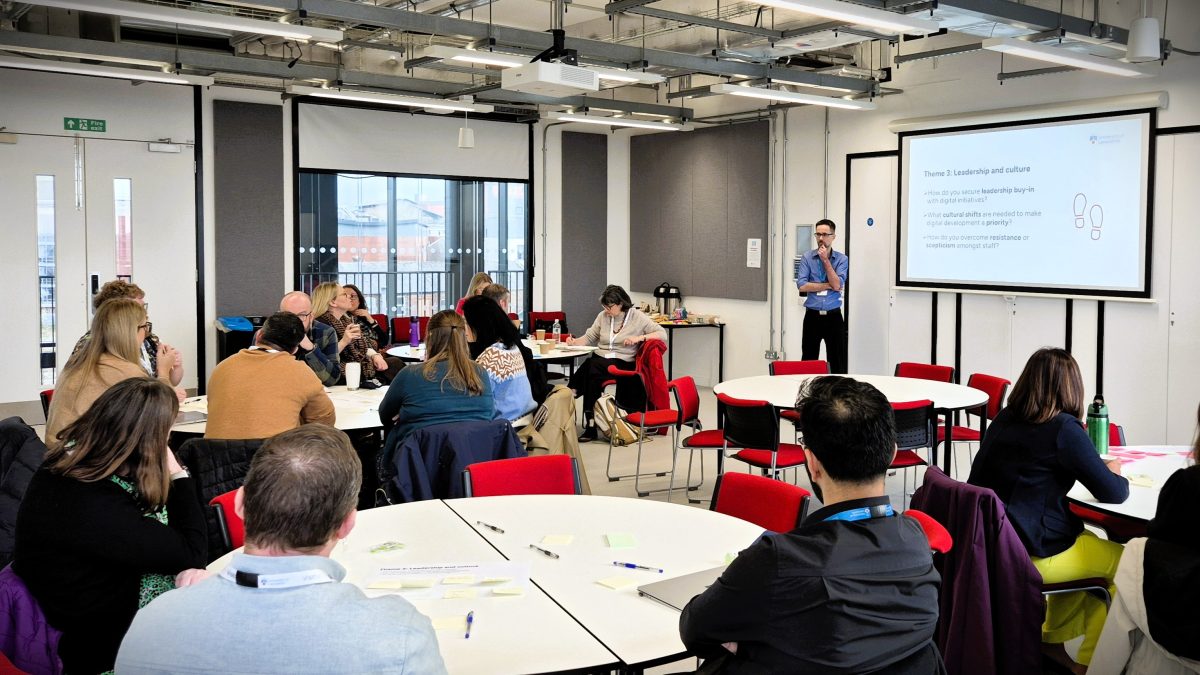
At the University of Lancashire, we recently hosted an inaugural face-to-face meetup for the ‘HE Digital Practice and Innovation Network’, a sector network formed at the start of 2025.
To open the day’s agenda, we opted to facilitate an interactive ‘toolkit’ workshop focussing on institution-wide digital skills development.
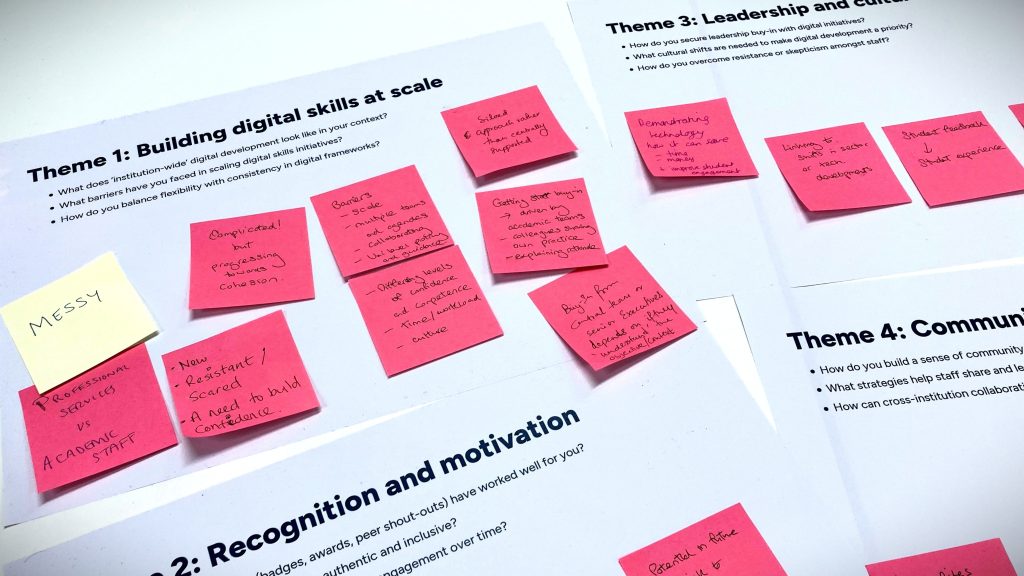
In this session, colleagues were asked to unpack four themes, each linked to a set of conversational prompts:
1) Building digital skills at scale
- What does institution-wide digital development look like in your context?
- What barriers have you faced in scaling digital skills initiatives?
- How do you balance flexibility with consistency in digital frameworks?
2) Recognition and motivation
- What forms of recognition have worked well for you?
- How do you ensure recognition feels authentic and inclusive?
- What role does recognition play in sustaining engagement over time?
3) Leadership and culture
- How do you secure leadership buy-in with digital initiatives?
- What cultural shifts are needed to make digital development a priority?
- How do you overcome resistance or scepticism amongst staff?
4) Community and collaboration
- How do you build a sense of community around digital practice?
- What strategies help staff share and learn from each other?
- How can cross-institution collaboration strengthen digital initiatives?
Key insights for driving digital skills development
As each theme was being explored, common trends began to emerge, leading to a powerful combination of reflection, shared experience and collaborative problem solving.
Participants agreed that success begins with a clear vision and leadership support. Digital development needs to be positioned as a strategic priority and championed from the top. To secure buy-in and sustain momentum it will likely be important to demonstrate tangible benefits, such as time savings, cost efficiencies, and improved student engagement.
Rather than treating digital skills as an isolated initiative, the group emphasised the importance of integration into existing staff development frameworks. Practical strategies included offering tiered pathways, starting with foundational bootcamps and progressing to self-paced options aligned with local CPD requirements.
Addressing common barriers like time constraints and confidence gaps was seen as critical. Here, leveraging peer influence and community building emerged as powerful enablers, with champions playing a key role in fostering collaboration and sharing good practice. Diagnostic tools such as the Jisc Discovery tool were highlighted for their ability to support self-assessment and track progress.
Recognition also featured prominently in discussions. Participants suggested making achievements visible and meaningful, through badges, awards, and shout-outs, while linking these to external frameworks like Advance HE Fellowships to enhance career progression. Finally, staying connected to sector trends was viewed as essential for maintaining relevance and reinforcing baseline skills.
Collaboration in action
Our delegation for the day was made up of colleagues from 13 different higher education institutions; with representation from Jisc, and a number of internal Digital Leads at the University of Lancashire. This made for some uniquely interesting conversation and debate.
One attendee, Nurun Nahar (Assistant Teaching Professor at the University of Greater Manchester, and 2025 Jisc Community Champion) reflected:
“It was really thought provoking to critically reflect on the challenges we experience in upscaling staff digital skills development – which is crucial to complementing our pedagogic and subject knowledge with the innovative use of emerging tools.
Hearing about the University of Lancashire’s ‘DigiLearn’ initiative’s reach and impact has been truly inspiring. I picked up some great ideas and lots of ‘food for thought’!
I particularly loved that we had colleagues from diverse professional backgrounds in HE, but we could still interconnect through our passion for enhancing digital practice.”
Nurun’s reflection echoed a common sentiment that collaboration across diverse roles provides a rich and diverse blend of perspectives, spanning both academic practice and professional support.
Looking back on the session, it strikes me just how valuable these spaces can be to understanding shared challenges and identifying the potential solutions.
As we move forward in our project, we will be reflecting on how we can turn these conversations into practical tools to support innovation and sector transformation.
In the meantime, I encourage readers to consider opportunities for collective development and improvement that you can either facilitate, or take part in. For example, there are many active communities listed at the Jisc ‘get involved’ page.