When we talk about the impact of community for digital skills, we often point to activities completed: events attended, tools explored, resources shared, accreditation gained. But the full value of a community can be difficult to capture with data alone. By collecting stories, we showcase the experiences people have, the confidence they build, and the changes they go on to make. Collecting impact stories helps us move beyond what happened to what changed, and why it mattered.
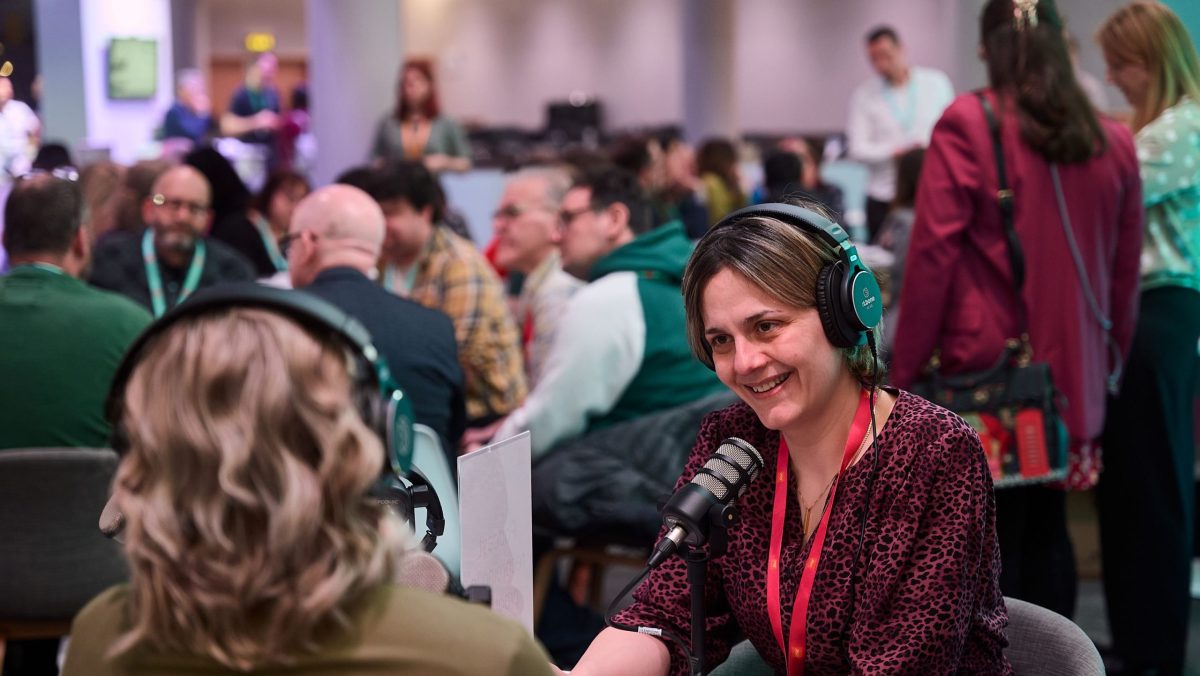
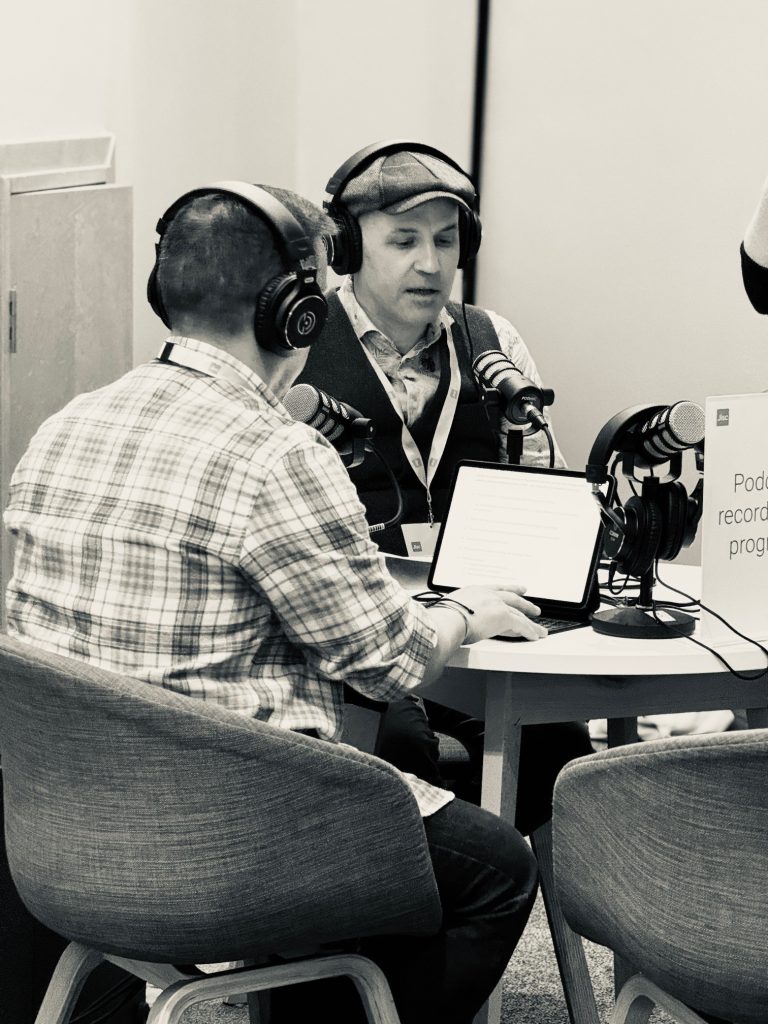
We asked members across different types of communities to fill in our online stories form to tell us about the personal impact. We also collected stories from our 2026 cohort of Community Champions during podcast interviews at Digifest.
Some clear patterns began to emerge: A set of building blocks that can be used to put together a valuable impact story:
- What brought the person to the community?
- What wasn’t working before?
- How did the community help?
- What changed for them and for others?
- What have they done since?
(1) What brought the person to the community?
Every story begins with a spark, but that spark doesn’t always look the same. For some, it’s a drive to learn and immerse themselves in a new space:
“Initially when starting out in my career as a learning technologist I wanted to be involved in as many communities of practice as possible so I could absorb knowledge like a sponge…I wanted to see how people were interacting with the various edtech tools, see what worked and what didn’t, so I could then apply that knowledge to my own work.”
Stephen Taylor, Learning Technology lead at Regent’s University London and 2025 Jisc Community Champion
For Stephen, the communities didn’t just provide answers, they helped build confidence and create the conditions for him to take part. There isn’t a single “right” starting point. But strong stories make that motivation visible. They help us understand what drew someone in, and what they were hoping to find.
(2) What wasn’t working before?
Alongside motivation, there’s often a gap or a sense that something could be better. Sometimes this is frustration with existing practice:
“I was frustrated that our medical students were still sitting in rather boring didactic lectures… I felt we could do better than we were. I wanted to bring our teaching into the modern age but realised in order to do this, I needed to improve my own digital skills first.”
Dr Suzanne Gaskell, Medical educator at University of Lancashire
In other cases, it’s about feeling isolated, new, or unsure. People described wanting to connect with others who truly understood their context. Without this sense of what was missing, it’s difficult for a story to show why the journey matters.
“I was keen to learn from others who had more experience, understand best practice across the sector, and feel connected to a wider professional network.”
Louise Ord, Learning Resource Centre Manager at Exeter College and 2026 Jisc Community Champion
(3) How did the community help?
This is where communities shift from being a backdrop to being an active part of the story.
Across these experiences, communities offered more than just resources, they created space. Space to learn, to ask questions, to test ideas and to connect with others who understand the work:
“Being part of a community of people who truly understand Learning Resource Centres has been hugely impactful… having a space where others genuinely ‘get it’ has been incredibly validating… The community has strengthened my confidence in my role… and continually inspired me through exposure to different approaches and ideas.”
Louise Ord
That sense of belonging often becomes the turning point. It helps people move from observing to participating, and from participating to contributing.
“I managed to overcome my quite severe imposter syndrome by slowly interacting with people’s posts. Slowly giving my thoughts or understanding on things and my involvement grew from there.”
Stephen Taylor
(4) What changed for them and for others?
As people become more involved, something begins to shift, first in their own practice, and then more widely.
At an individual level, people start to try new approaches, adapt what they’ve learned, and do things differently in their day-to-day roles:
“For my project I was able to create an engaging e-learning artefact using a combination of Co-pilot and Padlet Sandbox in a tiny fraction of the time… this is a new technique I could roll out to make our careers materials infinitely more engaging and valuable.”
Gary Elliott, Careers Technologist at University of Lancashire
“We have changed lots of our teaching content using videos, animations and improving accessibility… resulting in a better learning experience for students and a more enjoyable teaching role for me.”
Dr Suzanne Gaskell
These moments are central to an impact story. They show that engagement isn’t passive, but leads to action. But the change isn’t only practical; it’s also personal. People spoke about increased confidence, a stronger sense of identity and a growing pride in their role, sometimes describing this as transformative:
“Which was more important, the journey or the destination? And the answer is neither. It’s who you become, going through that journey…”
Dr Sacha Hasan, Associate Professor at Heriot-Watt University and 2026 Jisc Community Champion, speaking on our Community Hub 2026 podcast
What’s equally important is how this change extends beyond the individual. Community-led work is, by its nature, shared, and the strongest stories show how impact ripples outward to students, teams, and institutions.
Sometimes this is about connection and visibility:
“It has helped our team to feel part of the wider sector, and that we are not operating in a silo.”
Jacinta Jolly, Deputy Head of Library Services at NPTC Group and 2025 Jisc Community Champion
In some cases, it leads to tangible organisational change and shared practice:
“We’ll get together and put together what is the collective wisdom… we then sent that document to the university’s learning and teaching committee… it gets endorsed… turned into a web page… then we have clear evidence of a colleague engaging in practice development… and having that practice as an exemplar for other colleagues.”
Dr Brian McGowan, Deputy Head of ENHANCE at Ulster University and 2026 Jisc Community Champion, speaking on our Community Hub 2026 podcast
Together, these personal and collective shifts are what make impact visible. They show not just what someone learned, but how that learning was shared, applied and ultimately amplified.
(5) What have they done since?
Finally, great impact stories show momentum. As confidence and capability grow, people often move into new roles within their communities and beyond:
“Over time, the community also opened up opportunities for me to become more actively involved… eventually taking on the role of co‑chair… This was a significant step in my professional development, allowing me to contribute strategically, support others, and help shape the direction of the community.”
Louise Ord
For some, that progression becomes a defining part of their career:
“If I wasn’t as involved in the various communities as I am my life and career would have taken a very different trajectory… I now speak on national and global stages about Educational Technology… I am incredibly blessed.”
Stephen Taylor
For others, it’s a quieter continuation: staying involved, supporting peers, or simply not wanting the journey to end. Both are equally valid. What’s effective is showing that impact isn’t a one-off moment, it’s something that grows over time.
What stories will you tell?
At its heart, a powerful impact story is a simple one. It helps us understand where someone started, what changed, and why it mattered to them. What brings it to life are the details: the frustrations, the small steps forward, the moments of connection, and the unexpected opportunities along the way. Ultimately, impact stories aren’t just about capturing evidence of change. They’re about showing what’s possible when people come together, share openly, and support one another to grow.
Our Activating community-led digital skills guide gives you step-by-step instructions on how to utilise communities to bring people together and develop their digital capabilities.
To learn more, join us on 30 June 2026 at Powered by People: community-led transformation in education at University of Lancashire in Burnley.
Listen to stories from our 2026 Community Champions, visit our Digifest 2026 Community Hub podcast playlist.